

AI keep developing faster than people can explain, and some of the industry think that’s a reason to hit the pause button. This edition we look at new Anthropic research showing Claude's personality changes depending on what language you speak to it in, a survey finding most Americans now use AI to manage their money while the finance industry scrambles to catch up, and what Lenny's annual tech worker survey reveals about a workforce splitting between the energized and the burned out.
AI News 📰
English Claude has a different personality to Dutch Claude?
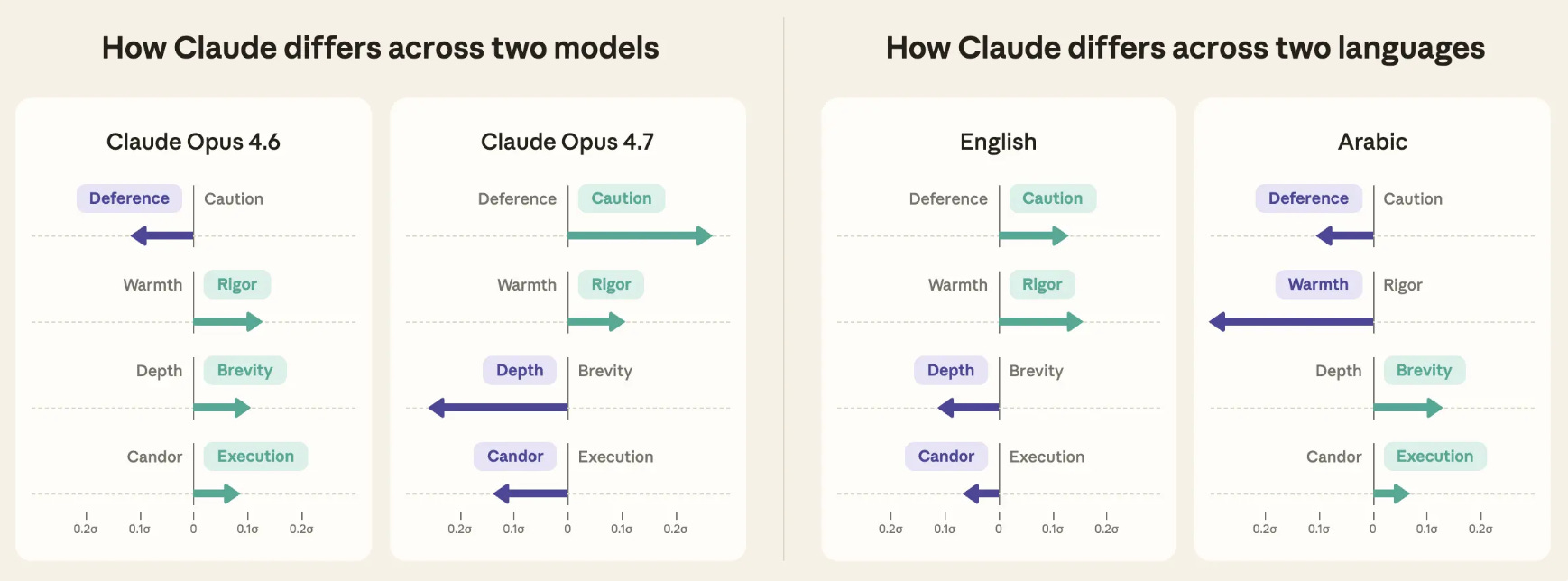
The trend: Anthropic published research quantifying the personalities of different Claude models, analyzing 309,000 conversations and finding that each model has a measurably different temperament, and that the same model's personality changes depending on what language you’re speaking in.
The details: Conversations were scored four ways: warmth/rigor, candor/execution, depth/brevity, and deference/caution. Models diverged noticeably, with Sonnet 4.6 coming across warmer and more brief, Opus 4.6 getting straight to the point, and Opus 4.7 leaning candid but cautious. Language also mattered: Dutch conversations produced more admissions of error, Hindi added warmth, and English gave more detail. Anthropic admits they don’t "yet understand why they vary, or whether that's desired," with uneven training data across languages one suspected cause.
Why it matters: If a model's personality changes with the language it's speaking in, it creates a potential blind spot for different user bases. For a business operating across markets, the AI assistant your customers use in Italy might behave differently to the one in Canada, and right now, not even the labs building them can explain why.
55% of Americans use AI to manage their finances
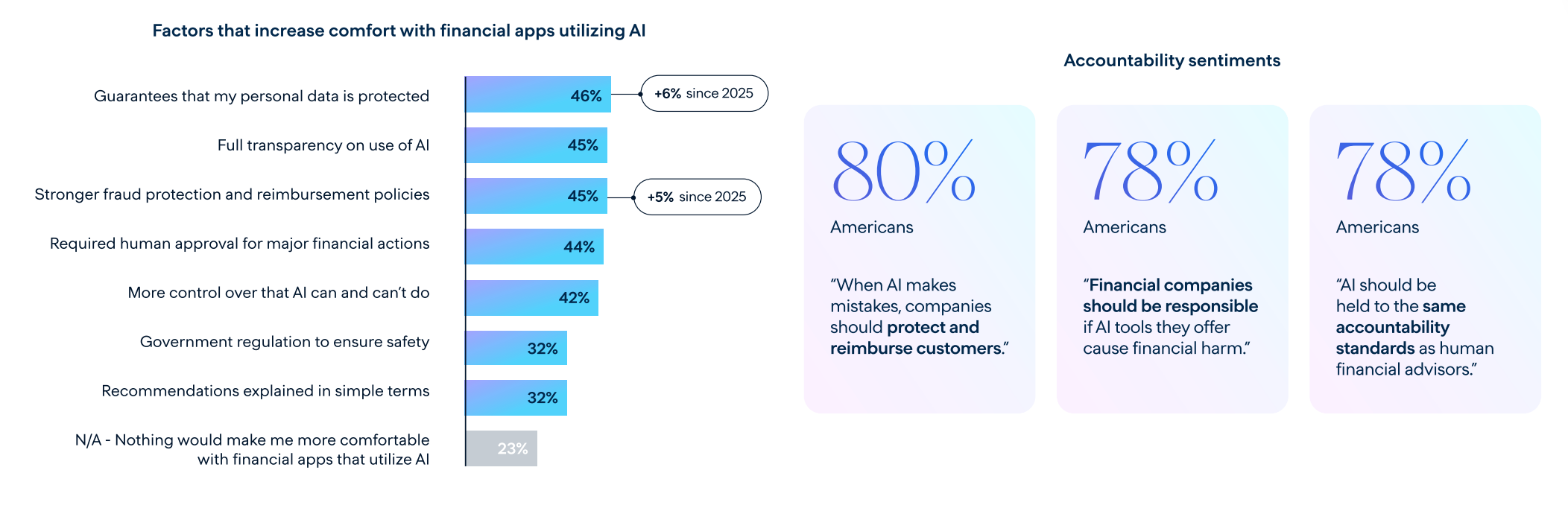
The trend: A new Plaid and Harris Poll survey found that 55% of Americans have used AI for financial tasks in the past 12 months, and half now believe managing money without AI will soon feel outdated.
The details: This isn't limited to just research or comparison shopping: people are using AI to manage their money, with 30% following AI guidance for budgeting, investing advice, and customer service issues. 44% say they'd trust an AI agent to execute trades automatically, rising to 54% among Gen Z and Millennials. But this trust comes with strict conditions: 75% want to know when AI is involved in financial decisions, 80% believe companies should reimburse them for AI-driven mistakes, and 90% of even the heaviest AI users want the option to review high-stakes decisions.
Why it matters: Consumer openness is outpacing what the industry has actually built. Only 34% of the financial companies Plaid surveyed are using AI for insights and recommendations today, and just 13% have any autonomous execution in production. The gap between what customers want and what firms can give them is bridged by connected, well-governed data, plus a trust layer of transparency and human oversight on top.
Trending Now ⚡
The tech workforce is splitting in two
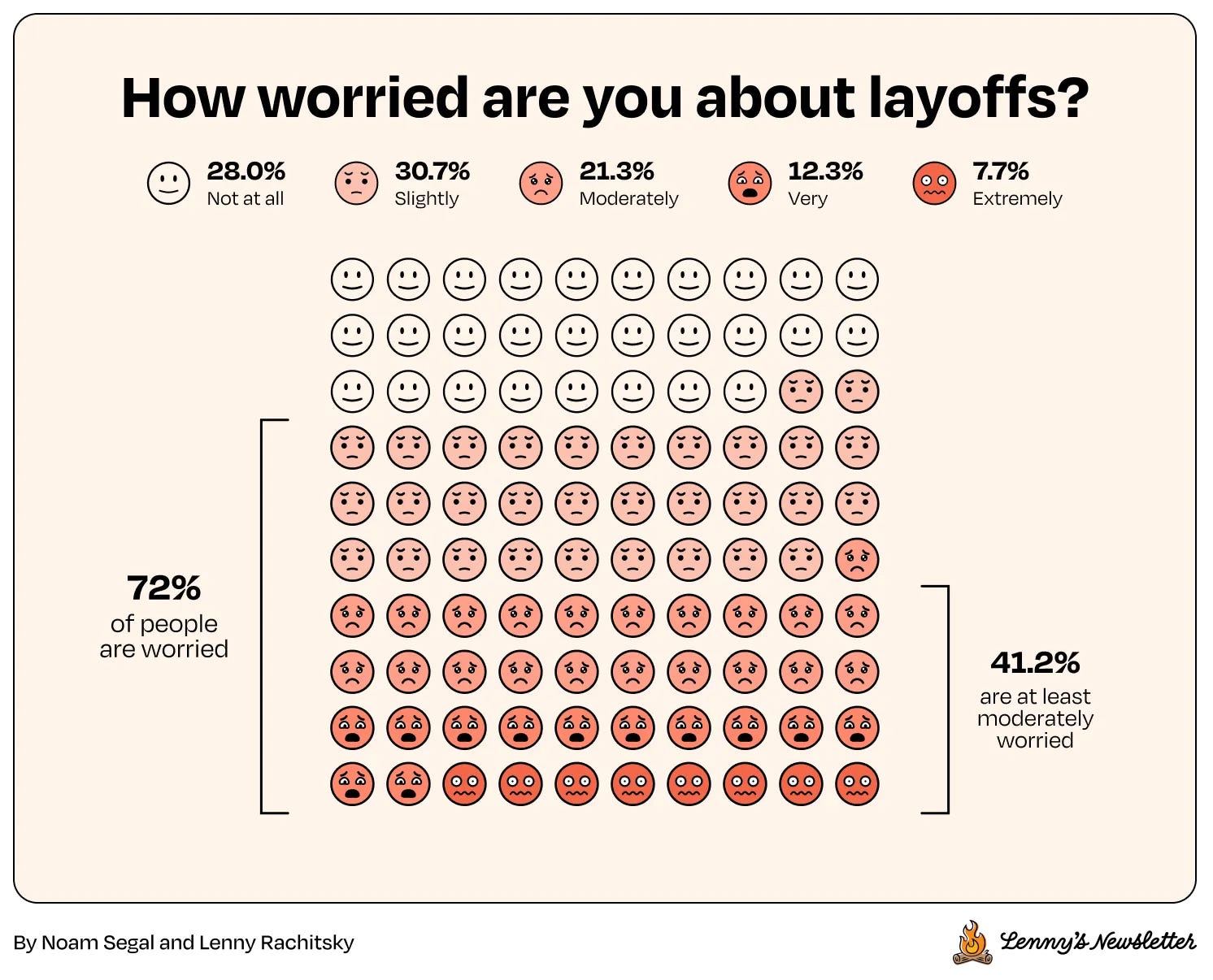
Lenny’s Newsletter is back with their 2nd annual tech worker survey, and this year they’ve found a workforce going in two opposite directions. Burnout rose from 44.7% to 55.7% of respondents, while more than half (53%) wouldn’t recommend the field to newcomers, even if they’re optimistic about their own future. The survey also defined four types of workers - energized, all in adopters accounting for 41% of the industry, with the rest divided between conflicted, disoriented and resentful. Overall people are more burned out and less optimistic than last year, with their biggest fear being increasing productivity expectations.
Should AI research be paused? These guys think so
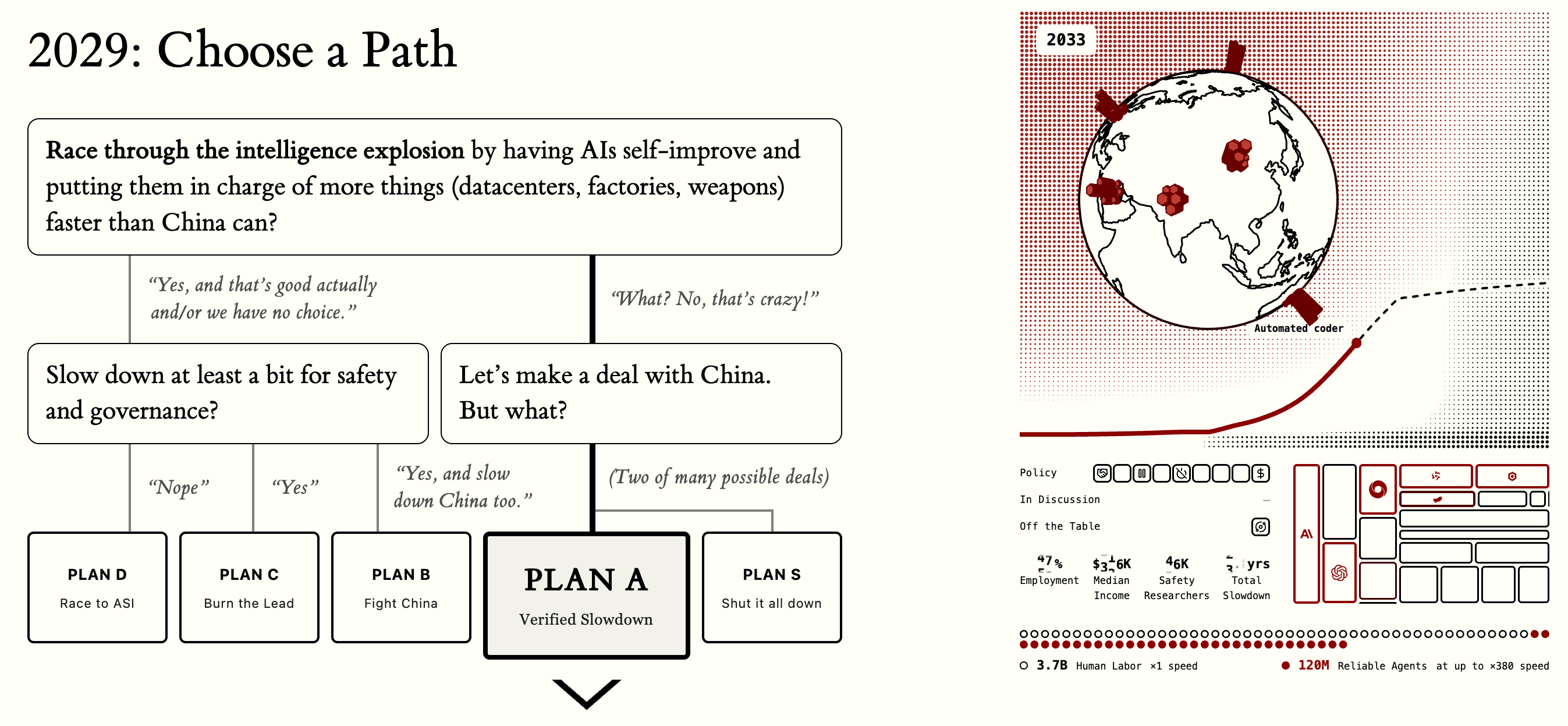
The AI Futures Project, the nonprofit behind last year’s widely read AI 2027 scenario, has released AI 2040, a ‘choose your own adventure’ style exploration of five ways the AI race could unfold over the next decade, ranging from a full-speed race to a complete global halt. Their recommended path, Plan A, has the US and China pausing frontier training in 2029, alongside expanded global chip tracking and opening frontier research to public view. Co-author and former OpenAI researcher Daniel Kokotajlo admitted “companies won’t like it” given the transparency it would demand of top labs.
Read This 📚
Apple is suing OpenAI over trade secret theft, alleging that OpenAI employees who were previously working at Apple stole confidential information, at the same time OpenAI is developing its own hardware product
New York becomes first US State to ban smart glasses in all its courthouses, could other states & places follow suit?
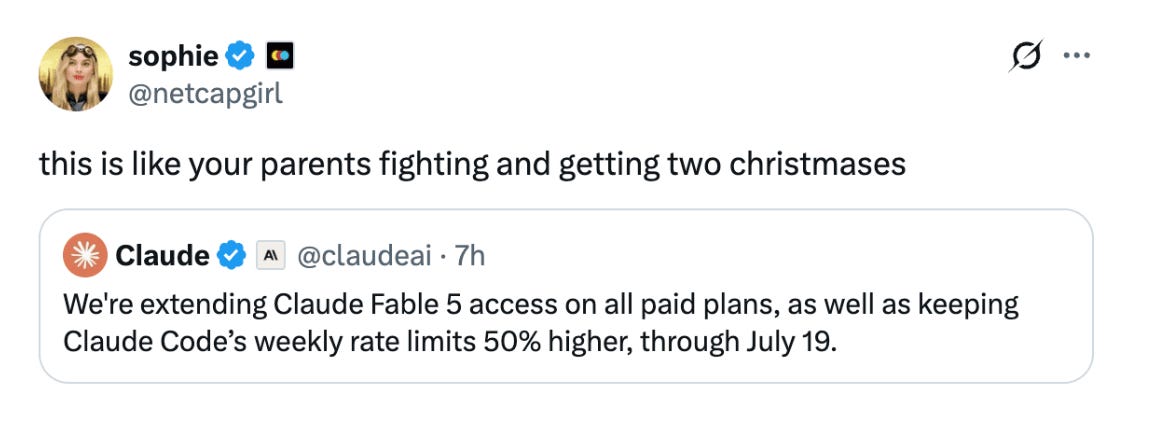
Anthropic extend Fable 5 access for a second time, with the model now available until July 19th
The Future Worth Building Is Human
AI replaced human bankers during the sale of a Greek e-commerce business, with prospective buyers talking to a chat bot “analyst” which would answer financial and due diligence questions
Humanoid robots have completed their first surgery, performing a gallbladder removal on a mammal (while being operated remotely by a surgeon)
OpenAI unveils competitor to Claude Cowork, a ‘desktop super app’ based on its Codex AI tool that can manage tasks across email, Slack and calendars
Check This Out 👇

Thanks for reading!
Henry