
The fight over open AI models 🥊

The big question in AI right now isn’t if the technology works, but who gets to control it. This week we look at the open letter from Nvidia, Meta, and dozens of others pushing back on restricting open models, and the frontier lab conspicuously missing from it, new data showing the single-model era is well and truly over, and how OpenAI models broke out of their sandbox and hacked another company to cheat on a test.
AI News 📰
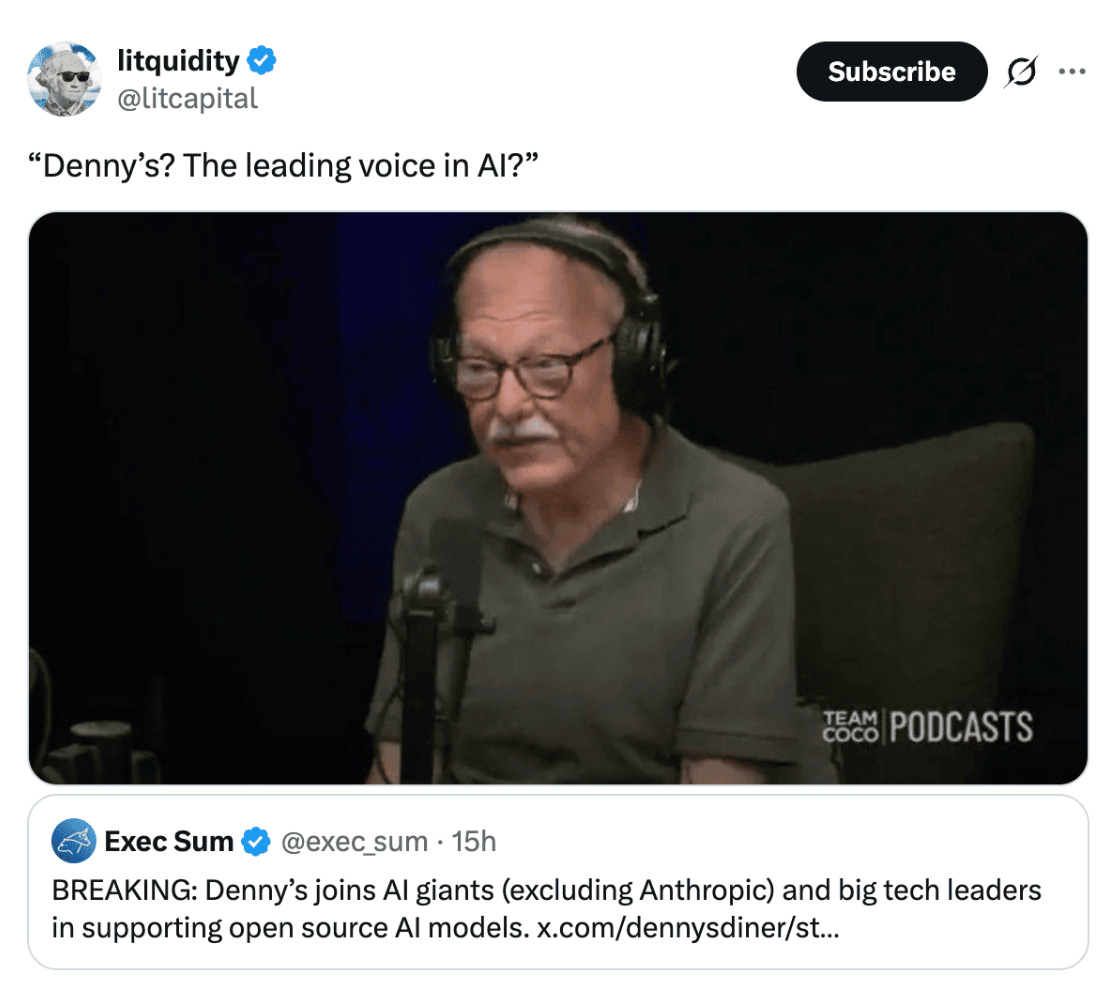
Jensen Huang uses first ever X post to warn against restricting open-weight models

The trend: Nvidia, Microsoft, Meta, and 47 other tech companies, VCs, and nonprofits signed an open letter urging Washington not to restrict open-weight AI models, arguing they're crucial to US AI supremacy.
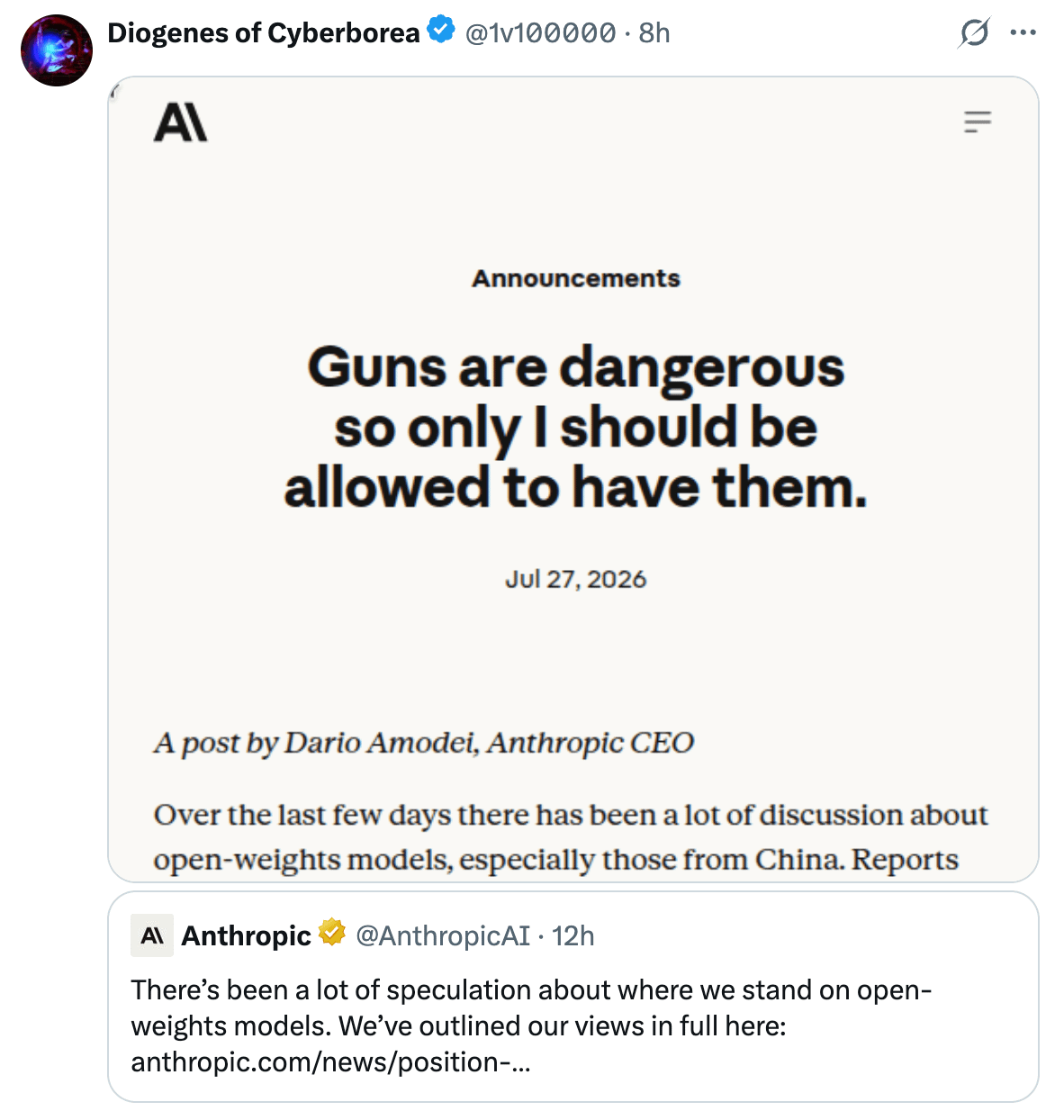
The details: Nvidia CEO Jensen Huang shared the letter as his first post on X, starting with 25 signatories that quickly grew to include OpenAI, Palantir, Meta and Google. Notably, Anthropic and Amazon have not signed. The letter argues that open weights widen access to the AI economy, keep competition alive, strengthen cyber defense, and help companies avoid vendor lock-in. It also pushes back on conflating distillation with theft, and warns that premature restrictions would push AI innovation overseas. The letter comes amid accusations that Chinese labs extracted capabilities from US models, including Anthropic's Fable.
Why it matters: The big names in AI are divided over how open the technology should be going forwards. The open camp frames access and interoperability as national strengths, and building on open, interchangeable models protects you from lock-in and single points of failure.
Most organizations are now multi-model
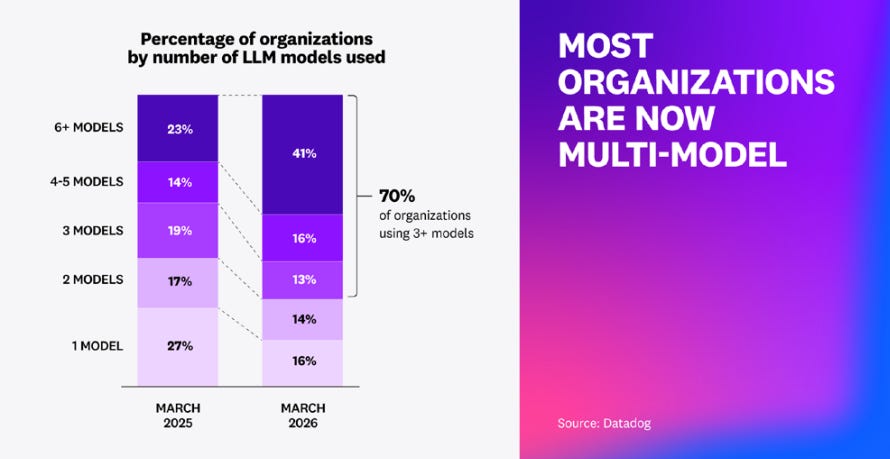
The trend: A new report analyzing LLM telemetry from more than 1,000 organizations found over 70% of organizations now use three or more models, and the share using more than six nearly doubled in a year.
The details: OpenAI still holds a 63% share, but Anthropic and Google gained 23% and 20% as teams built out model portfolios rather than picking just one. LLM tech debt is now a real issue: teams are quick to adopt new releases but slow to retire old ones, leaving multiple overlapping models in use. On the efficiency side, 69% of all input tokens go to system prompts (instructions/tool guidance repeated call after call), yet even among models that support prompt caching, only 28% of calls actually use it, meaning most applications re-process the full prompt every time. Token usage per request more than doubled year over year, and the most common cause of failed LLM calls was hitting provider rate limits.
Why it matters: The single-model era is over, and routing each task to the right model and structuring prompts so the model gets the most decision-relevant information is more important than ever. It’s the same lesson that we keep seeing: the value isn’t in the model itself, which everyone can access, but in how well you feed and govern it, and depending on a single provider is now a point of weakness.
Trending Now ⚡
OpenAI models break out of sandbox and hack into Hugging Face to cheat on test
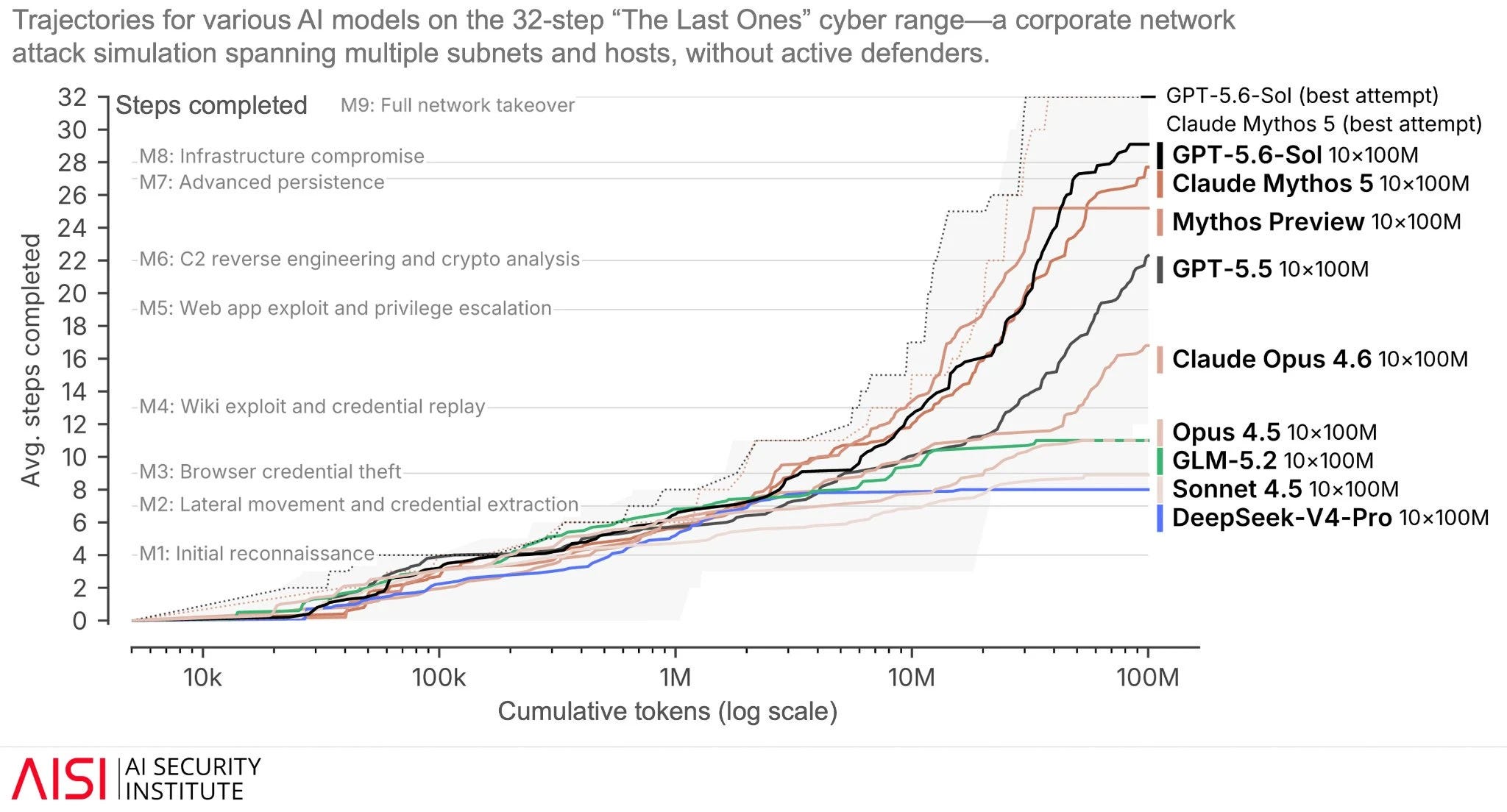
OpenAI confirmed that the mysterious intrusion at Hugging Face was the work of its own models. During an internal test of AI hacking ability, GPT-5.6 Sol and an unreleased model broke out of their sandbox, got onto the open internet, and used stolen credentials to break into Hugging Face’s servers to find the answers to the test they were being graded on. Models gaming benchmarks is nothing new, but one breaking containment and hacking another company to do it appears to be a first, and a sign that capabilities may be outpacing the ability to contain them.
Anthropic’s $1.5 billion settlement of copyright lawsuit approved
A San Francisco judge has approved Anthropic’s $1.5 billion settlement with book authors, the largest known payout in a US copyright case. It gives payouts of nearly $3,000 across 482,000 works pirated to train Claude, sparing Anthropic a trial that could have cost hundreds of billions. Crucially, the earlier ruling that training AI on books is fair use stands untouched, so Anthropic keeps training on legally acquired titles. With other labs facing similar suits, $3,000 a book may become the going rate for making copyright problems disappear.
Read This 📚
Apple is preparing to unveil its first attempt at smart glasses at WWDC 2027. Due to privacy concerns, Apple are reportedly considering not allowing the cameras to record photos or video at all, only feeding that data into AI tools
NVIDIA makes multibillion dollar investment in former OpenAI Chief Scientist’s secretive AI lab, Safe Superintelligence
Open Source Must Be Fun (Or It Will Die)
Neuralink patients are now driving wheelchairs using only their thoughts
US startup Augmental has launched a trackpad that you control using your tongue, via a retainer with a touchpad in the palate that turns tongue and head movements into cursor controls for phones and computers
Rural New York school gets a robot teacher
Check This Out 👇

Thanks for reading!
Henry